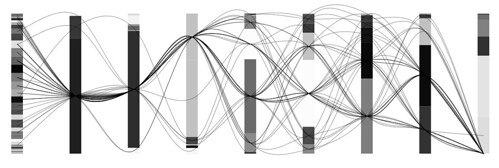
I have a habit of picking up new things to try when I want to do things I could accomplish with the tools already at my disposal. This weekend, I spent a bit of time with ruby-processing. It runs everything in Ruby, and uses JRuby as a bridge to run Processing. I used it to visualize some data about web developers after parsing the original .xsl file into .tsv files and cleaning up the data using Python. I’m going to do quite a bit more work on the visuals above, but I wanted to put in a good word for ruby-processing now.
The first thing that I liked was that I wasn’t writing Java, a language lots of people seem to hate on, the source of which hate I am coming to understand as I learn about other languages. Ruby’s syntax is cleaner, even if it seems strange at times (welcome home ‘@,’ ‘$,’ and ‘:’ prefixes).
The next big improvement over vanilla Processing was writing the code inside of TextMate. This isn’t inherent to ruby by any means; I could probably write Java inside of TextMate. However, ruby-processing made it really easy to launch sketches I was working on, and also to edit them in real-time.
I also spent some time messing around with field on Saturday. It looks like really exciting software, with a lot of promise. Unfortunately, it bogged down and became unusable while running through the examples on their site. I’ll probably give it another go, but ruby-processing is letting me make what I want to for now (and that’s what is really important).

